
The United States carried out a fresh round of airstrikes on Iran early Thursday, intensifying tensions in the Middle East as Tehran responded with missile and drone attacks targeting Bahrain, Kuwait and Jordan. The latest exchange marks another escalation in a conflict that has continued despite ongoing diplomatic efforts aimed at securing a ceasefire and a broader political settlement.
The strikes came after US President Donald Trump warned that Iran would face consequences if negotiations to end the conflict remained stalled. Iran, meanwhile, insisted it would continue exerting pressure through its control over the Strait of Hormuz, a vital global energy route.
US targets military infrastructure across Iran
The US Central Command said American forces had completed a new wave of strikes before sunrise on Thursday, targeting what it described as Iranian military surveillance systems, communication networks and air defence installations.
According to the US military, the operation involved assets from the Air Force, Navy and Marine Corps and was conducted in response to what Washington termed continued Iranian aggression.
Explosions were reported in Tehran, the port city of Bandar Abbas and several locations near the Strait of Hormuz. Iranian authorities acknowledged the attacks but did not immediately provide details regarding casualties or damage.
The latest operation marks the second major US strike on Iran within days and the third significant military exchange this week.
Iran launches retaliatory attacks in the Gulf
In response, Iran launched missiles and drones towards military targets in Bahrain, Kuwait and Jordan, all of which host American military personnel.
Kuwait temporarily closed its airspace as air defence systems were activated to intercept incoming threats. Authorities said several flights were diverted to alternative destinations as a precautionary measure.
Iranian officials described the attacks as retaliation for American military actions and accused Washington of further destabilising the region.
Jordan also reported heightened military preparedness after warnings of missiles and drones entering its airspace. Iranian authorities claimed that one of their targets was the Muwaffaq Salti Air Base, which hosts US military assets.
Conflict continues to impact global energy markets
The ongoing conflict has continued to disrupt global energy supplies and international shipping routes.
Since the war began in late February, oil prices have risen sharply, with benchmark crude trading above USD 93 per barrel. Analysts have linked the increase to concerns over supply disruptions in the Strait of Hormuz, through which a significant portion of the world`s oil exports pass.
President Trump claimed that the US military has been helping ensure the movement of commercial oil shipments through the strategic waterway despite Iranian efforts to restrict maritime traffic. However, details of those operations have not been independently verified.
The US military has maintained that commercial vessels continue to navigate the strait, despite repeated threats and attacks linked to the conflict.
Diplomatic efforts continue despite military escalation
Even as military operations intensify, diplomatic channels remain active.
According to reports, a delegation from Qatar arrived in Tehran on Wednesday following consultations with US officials. The talks are part of broader regional efforts to secure a negotiated settlement and prevent further escalation.
Iran`s Ambassador to the United Nations, Amir Saeid Iravani, told the UN Security Council that Tehran would not negotiate under threats or pressure.
At the same time, officials on both sides have indicated a willingness to continue discussions, suggesting that diplomatic engagement remains possible despite the worsening security situation.
Key disagreements remain unresolved
Major differences continue to prevent a breakthrough in negotiations between Washington and Tehran.
The United States is demanding that Iran significantly reduce or surrender its stockpile of highly enriched uranium as part of any agreement. Iran maintains that its nuclear programme is peaceful and has rejected calls to relinquish its nuclear material.
Tehran is also seeking sanctions relief and the release of frozen assets before agreeing to a final deal, demands that Washington has so far resisted.
Another sticking point involves the ongoing conflict between Israel and the Iran-backed Hezbollah movement in Lebanon. Iranian officials have insisted that any broader regional settlement should address the fighting in Lebanon, while Israel has continued military operations against Hezbollah.
Region faces growing uncertainty
The latest exchange of strikes underscores the fragile nature of efforts to stabilise the Middle East. With military operations continuing across multiple fronts and diplomatic negotiations making limited progress, concerns are mounting about the possibility of a wider regional conflict.
Analysts warn that prolonged instability could further affect global energy markets, international trade and regional security, while increasing the humanitarian toll across affected countries.
As both sides continue to exchange threats and military action, the prospects for a quick resolution remain uncertain despite ongoing mediation efforts by regional and international actors.
(With inputs from AP)
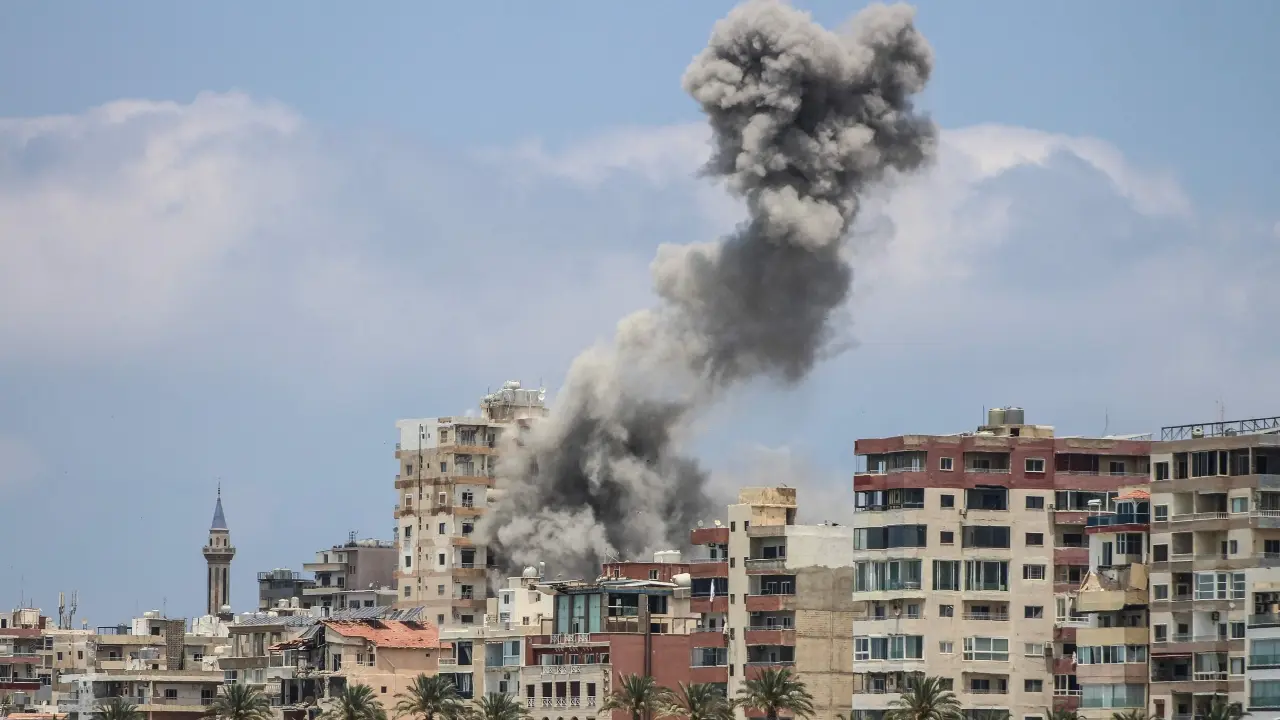
Iran retaliates after new US strikes, targets Bahrain, Kuwait and Jordan
