
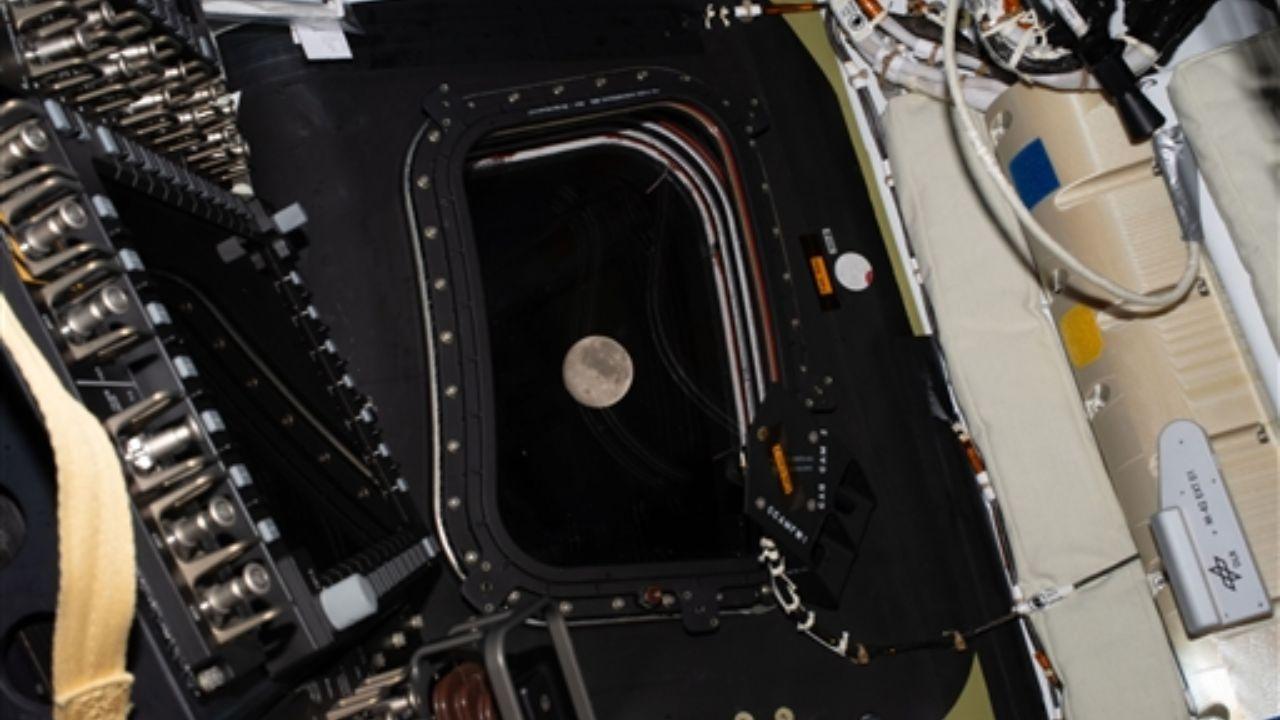
NASA’s Artemis II mission has reached an important phase as its astronauts enter the Moon’s sphere of influence.
It is an important development in the mission since the region where the Moon’s gravity becomes stronger than Earth’s pull, guiding the spacecraft closer to the lunar surface.
It marks humanity’s return to deep space travel after more than 50 years since the Apollo missions.
The crew
The crew includes three Americans- Commander Reid Wiseman, pilot Victor Glover, mission specialist Christina Koch and one Canadian astronaut Jeremy Hansen represent a diverse and experienced team chosen to lead humanity’s return to deep space are now preparing for a close flyby of the Moon, a key highlight of the mission.
As the @NASAArtemis II crew approaches the Moon, they will get a firsthand view of the Moon`s surface. One of the most striking (pun intended) features they will see is the craters which mark its surface, and are especially numerous on the far side, which the crew will be able to… pic.twitter.com/k6gXNjdEGv
— Chris Williams (@Astro_ChrisW) April 6, 2026
Breaking records in deep space
The Artemis II mission is set to rewrite history as it travels farther from Earth than any human mission before. The crew is expected to surpass the record set by Apollo 13 in 1970, which reached 248,655 miles (400,171 km) from Earth. NASA estimates Artemis II will go over 4,100 miles (6,600 km) farther, setting a new benchmark for human spaceflight.
This is part of a six-hour manoeuvre using a free-return trajectory, allowing the spacecraft to loop around the Moon and naturally head back towards Earth.
As the mission progresses, the astronauts are not just witnessing the moon—they are observing a preserved record of cosmic history, offering insights into both the Moon’s past and Earth’s origins. Meanwhile, the crew continues intense preparation for the flyby, NASA shared, “No days off when you`re Moonbound… the world watches in anticipation as the crew presses on toward the Moon.”
No days off when you’re Moonbound.@Astro_Christina continues prep for tomorrow’s lunar flyby after completing her workout.Meanwhile, our entire world watches in anticipation with hope and excitement as the @NASAArtemis II crew presses on toward the Moon. pic.twitter.com/iIiAiXHej0
— NASA (@NASA) April 6, 2026
What will the astronauts see?
The day (April 6) is one of the most exciting moments of the mission.
As the Artemis II crew approaches the Moon, one of the most remarkable sights awaiting them is the lunar surface itself—covered in countless craters that tell the story of the solar system’s past.
NASA astronaut Chris Williams explained that these craters will be among the most striking features visible to the astronauts. He said:
“As the NASA Artemis II crew approaches the Moon, they will get a firsthand view of the Moon`s surface. One of the most striking (pun intended) features they will see is the craters which mark its surface, and are especially numerous on the far side, which the crew will be able to see direct.”
Out of their windows, they will see:
The Moon’s far side, which is never visible from Earth
Thousands of craters formed over billions of years
Massive features like the Orientale Basin, a huge impact crater
Distant views of planets like Venus, Mars and even Satur
As the @NASAArtemis II crew approaches the Moon, they will get a firsthand view of the Moon`s surface. One of the most striking (pun intended) features they will see is the craters which mark its surface, and are especially numerous on the far side, which the crew will be able to… pic.twitter.com/k6gXNjdEGv
— Chris Williams (@Astro_ChrisW) April 6, 2026
Experts say these craters provide valuable insights because Earth’s own impact history has largely been erased by natural processes like weather and tectonic activity.
The crew is also expected to capture thousands of images of key locations, including the Orientale Basin and past Apollo landing sites.
How will they return safely?
Instead of landing, Artemis II is following a “free-return trajectory.” This means the spacecraft will swing around the Moon using its gravity and automatically head back towards Earth. This path reduces fuel use. It’s the same technique used during Apollo 13, ensuring a reliable and safe return.
During the flyby, the Orion capsule will come within about 4,000 miles of the Moon before turning back. The entire return journey is expected to take around four days.
What does this mission mean for the future?
Artemis II is not just a test flight, it is a crucial step toward future missions. NASA plans to send astronauts to land near the Moon’s south pole in the coming years.
This mission follows in the footsteps of Apollo 8 and Apollo 13, combining exploration with safety-focused planning. Future missions like Artemis III and IV aim to bring humans back to the Moon’s surface.
For the crew, it’s also a moment of reflection. Looking back at Earth from such a distance, they see it as a small, fragile world in a vast universe—a reminder of how connected humanity truly is.
As the mission continues, Artemis II is not just exploring space, it’s opening the door to the next era of human exploration.
(With AP and ANI Inputs)
